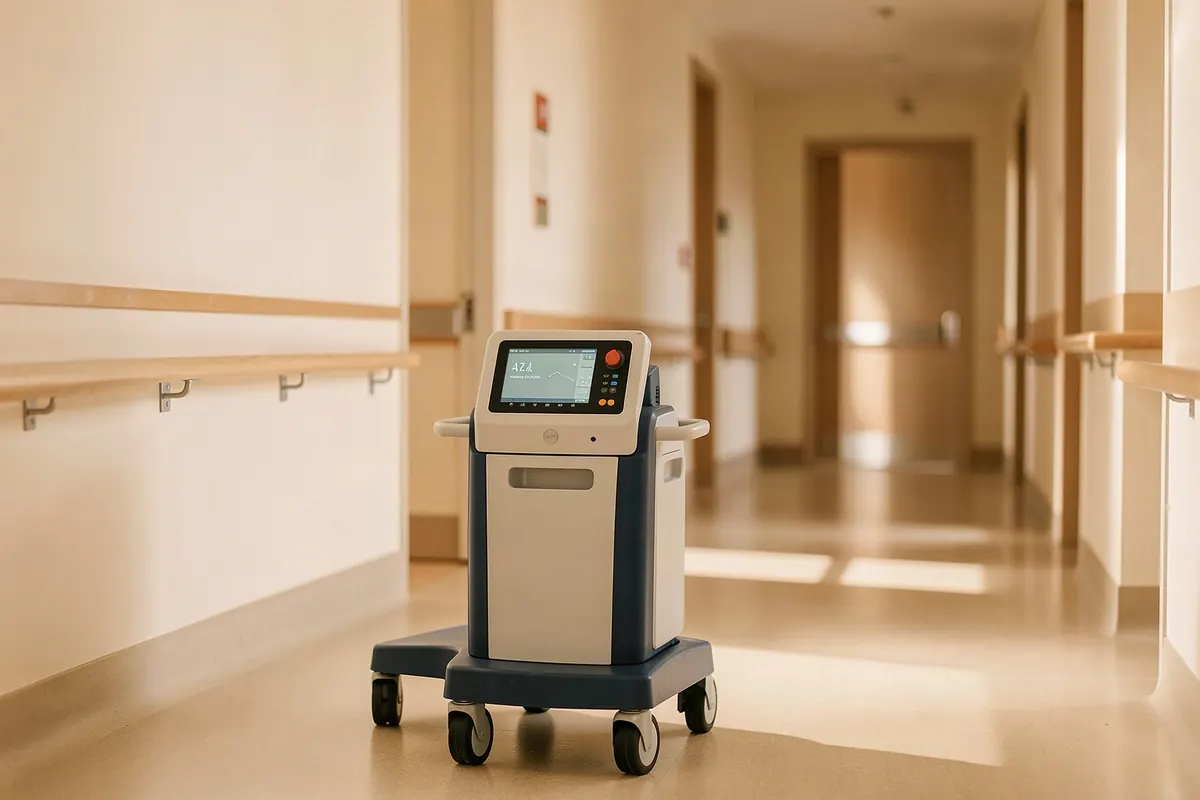
Mobile Imaging for Skilled Nursing and Assisted Living
For a skilled nursing or assisted living facility, an imaging order is rarely just an imaging order. It is transport to arrange, a staff member to send, a resident who is uncomfortable and disoriented by the trip, and most of a day gone. Mobile imaging exists to take that whole sequence off the table for the studies it can cover.
What the transfer actually costs
The dollar figure on an ambulance or medical transport is the visible part. The rest is harder to see on a budget line. A resident with dementia who leaves a familiar building and comes back agitated may take days to settle. A resident at fall risk is at higher risk during a transfer than in their room. Staff time spent coordinating and accompanying is time not spent on the floor. And the study itself frequently could have happened at the bedside.
None of that argues against transfer when a resident genuinely needs a hospital. It argues against transfer for a routine chest film.
What we can do on site
A technologist arrives with portable equipment and works in the resident's room. No transport, no waiting room, no change of environment. What is available depends on the market:
- X-ray for suspected fractures after a fall, chest films for respiratory changes, and placement checks.
- Ultrasound for abdominal, vascular, and soft tissue questions, in real time and without radiation.
- Echocardiogram for cardiac structure and function.
- EKG for rhythm and electrical activity.
Missoula, Helena, Great Falls, Bozeman and Manhattan, and the Flathead Valley carry all four. Billings carries X-ray, ultrasound, and EKG. Cheyenne carries X-ray and EKG. We would rather list that plainly than let a facility plan around a service its market does not have.
What a visit looks like
A provider order comes in, our team confirms the details, and a technologist is scheduled in the region. For X-ray and EKG, same-day service is the standard in covered markets. The technologist works around the resident rather than the other way around, which for a bed-bound or contracted patient makes a genuine difference to positioning and comfort. Reads come back through our partner Rapid Radiology, with most X-ray reads returned the same day.
Staff involvement is minimal. Someone points the technologist to the room and is available if the resident needs reassurance. That is usually the extent of it.
The population overlap worth noticing
The residents who are hardest to transport are also, as a group, the ones most likely to need imaging. Older, more likely to fall, more likely to have cardiac and respiratory conditions that need periodic checking. That overlap is the reason mobile imaging exists as a category, and it is why a facility that sets up a standing relationship tends to order more appropriately rather than less. When the barrier to a routine study drops, the study happens when it should instead of after a problem has grown.
Getting set up
There is no complicated onboarding. A provider order is required for each study, the same as anywhere. If your facility wants to understand coverage, turnaround, and how orders are best routed for your team, the FAQ covers the common ones and a call is the fastest way through the rest. The mechanics are covered in how ordering mobile imaging works, and the case for keeping residents in place is laid out in mobile X-ray keeps patients home.