Which Scan Answers Which Question
Patients rarely choose their own imaging, and they should not have to. But understanding what each study is actually for makes the conversation with your provider a better one, and occasionally reveals that a faster, cheaper test would answer the question just as well.
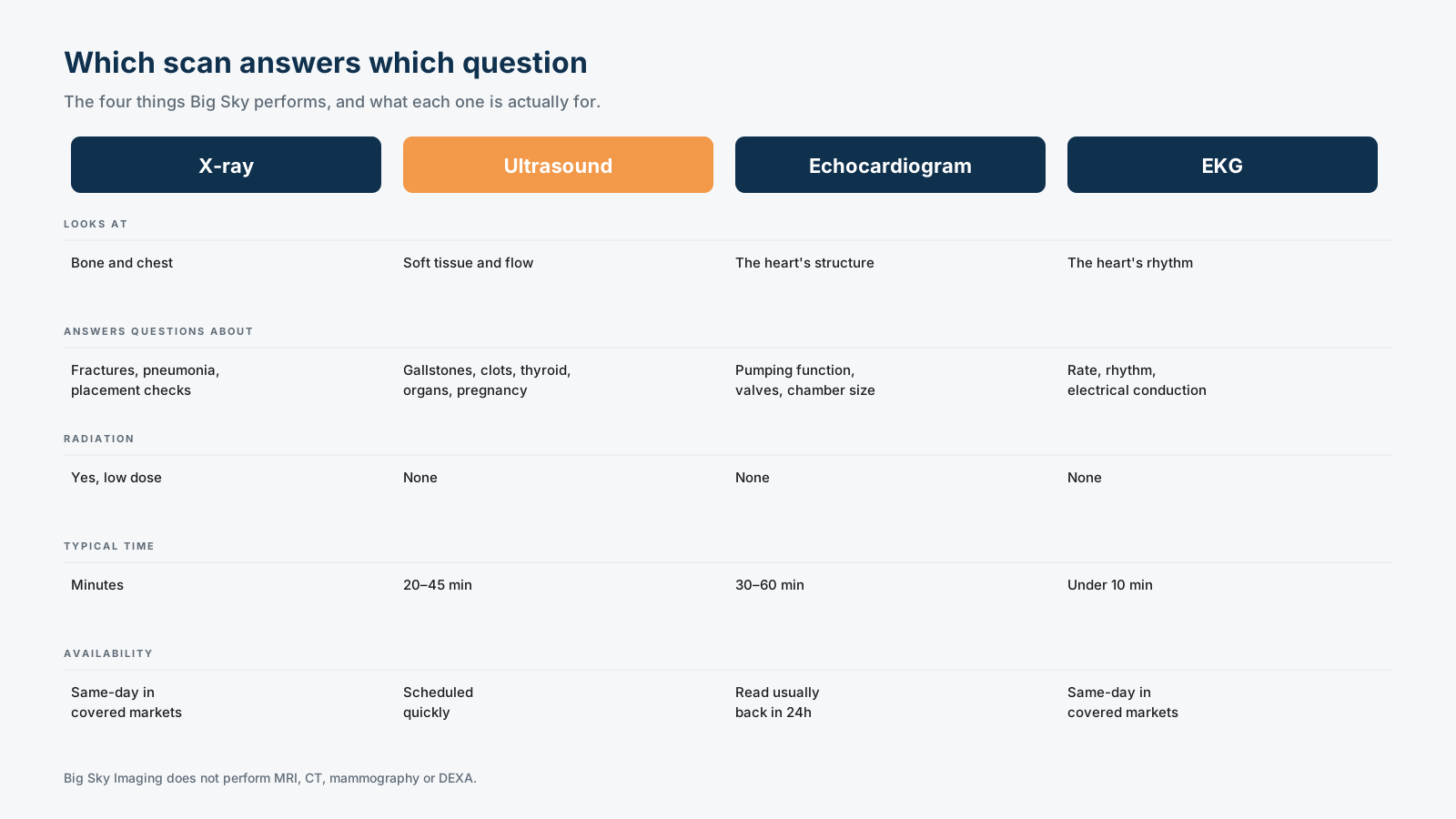
X-ray: dense things and air
X-ray is fast, cheap and unbeatable at what it does well: bone and the chest. Fractures, dislocations, joint changes, pneumonia, fluid on the lungs, and checking the position of a tube or a line. It uses a small dose of radiation, takes minutes, and in covered markets we do it same-day.
What it is poor at is soft tissue. A normal X-ray does not rule out a torn ligament, a gallbladder problem or a blood clot, because those things barely register on it.
Ultrasound: soft tissue and movement
Ultrasound uses sound rather than radiation, which is why it is the study of choice in pregnancy and in children. It shows soft tissue and things that move: organs, fluid, blood flow. Gallstones, kidneys, the thyroid, a suspected clot, a soft tissue lump, flow through the carotid arteries.
Its weakness is that sound does not travel through bone or gas. It cannot see inside the skull in an adult, cannot see through the lungs, and struggles past loops of bowel.
Echocardiogram: the heart's structure
An echocardiogram is ultrasound aimed at the heart. It shows how well the muscle is pumping, whether the valves work, whether chambers are enlarged, and whether there is fluid around the heart. It is the study for shortness of breath, a murmur, or suspected heart failure.
EKG: the heart's rhythm
An EKG records electrical activity rather than producing a picture. Rate, rhythm, conduction. It is quick, needs no preparation, and answers a completely different question from an echocardiogram. The difference between the two is worth understanding properly, because people are regularly told they have had "a heart test" without knowing which.
When none of these is the right tool
This is the part most imaging providers leave out. We do not perform MRI, CT, mammography or DEXA. If your question is a torn meniscus, a detailed look at the brain, breast cancer screening or bone density, we are not your stop and we will say so rather than take the referral.
It is still worth asking your provider whether the question can be answered by something simpler. Plenty of problems people assume need an MRI are answered sooner and for less by an X-ray or an ultrasound. But plenty are not, and pretending otherwise would waste your time.
The scans we do not offer, and where they fit covers this in full, with specific notes on MRI in Montana and bone density scanning.
The one thing all four have in common
Every one of them needs a provider's order. None of them needs insurance prior authorization to get onto our schedule, which is usually the step that causes the wait. See do you need a referral for imaging in Montana.