How to Prepare for Your Imaging Exam
Most imaging needs no preparation whatsoever. A few studies need something specific, and getting that wrong is the single most common reason a scan has to be rescheduled. Five minutes of reading here saves a wasted trip.
We tell you exactly what applies to your exam when we schedule it. This page is so you know why.
Studies that need fasting
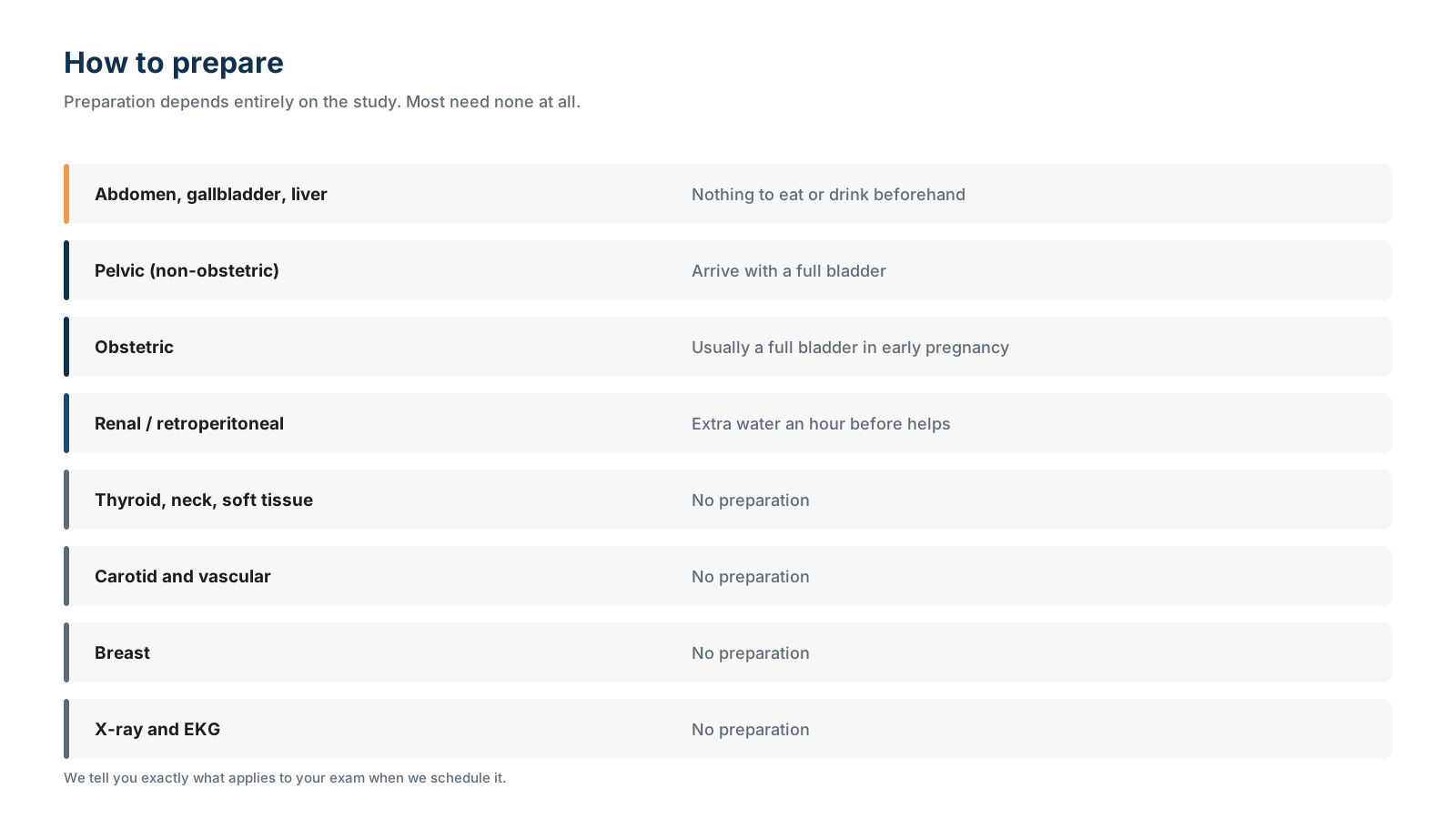
Abdominal, gallbladder and liver ultrasound. Nothing to eat or drink beforehand. The reason is mechanical: the gallbladder fills between meals and collapses after one, and a collapsed gallbladder is very hard to assess. Eating first is the difference between a diagnostic study and one that has to be repeated.
Take your regular medications with a small sip of water unless your provider has told you otherwise. If you are diabetic, say so when you schedule, because a long fast is not a neutral instruction for you and we will work around it.
Studies that need a full bladder
Pelvic ultrasound, and obstetric studies in early pregnancy. A full bladder pushes bowel out of the way and creates a clear window to see through. Arrive without having emptied it. This is uncomfortable and it is genuinely necessary; there is no way to produce the same view otherwise.
For a transvaginal study, the opposite applies and an empty bladder is preferred. If your order includes both approaches, we will explain the sequence.
Studies that need nothing
Thyroid and neck, soft tissue, breast, carotid and most vascular studies, X-ray and EKG all need no preparation at all. Eat normally, take your medications, arrive as you are.
Aortic studies are the one vascular exception, where fasting produces clearer images.
What to bring and wear
- Your provider's order, if you have a paper copy
- Photo ID and insurance card if you are billing insurance
- A list of your medications
- Two-piece clothing that is easy to move. You will often not need to change at all
- For an EKG, something that opens at the front
Leave jewellery at home where you can. For X-ray, metal in the field of view has to come off.
If we are coming to you
Mobile visits need one thing from the location: a space the technologist can work in. Room to get equipment beside the bed or chair, somewhere to plug in, and someone available who knows the patient. If the patient has mobility limitations, isolation precautions, or anything else that changes the approach, tell us when the order is placed rather than when we arrive.