What an Abdominal Ultrasound Shows
Abdominal ultrasound is the most commonly ordered study on our list, and the one patients ask the most questions about. It is also the study where preparation actually changes whether the pictures are any good.
What it can see
An abdominal ultrasound looks at the solid and fluid-filled structures in the upper abdomen: the liver, gallbladder and bile ducts, pancreas, spleen, kidneys and the abdominal aorta. It is very good at some questions and genuinely poor at others, and knowing which is which saves everyone time.
It is the first-line study for suspected gallstones, and it is excellent at that. It shows liver texture and size, fluid where fluid should not be, kidney stones and obstruction, and an aorta that has widened. It is the standard tool for right-upper-quadrant pain.
What it cannot see well
Ultrasound does not travel through gas or bone. That means loops of bowel get in the way, and the pancreas in particular is often partly hidden behind them. A normal-looking ultrasound does not rule out everything in the abdomen, which is why a provider sometimes orders a CT afterwards. We do not perform CT, and if that is what your order calls for we will say so rather than take the referral. See the scans we do not offer.
Complete or limited
A complete abdominal ultrasound surveys everything listed above. A limited study looks at one organ or one quadrant, usually the gallbladder, when the clinical question is narrow. The limited study is cheaper and quicker, and the right choice when the provider already knows what they are asking.
Occasionally a limited study finds something that warrants looking further, and becomes complete. If that happens we tell you, rather than surprising you on the bill.
Why fasting matters here
The gallbladder fills between meals and empties after one. Scanning it after breakfast means scanning a collapsed gallbladder, which is much harder to assess and can mean repeating the study. That is the entire reason for the fasting instruction, and it is why we would rather tell you clearly than have you turned away.
Pelvic studies are the opposite: a full bladder pushes bowel out of the way and gives a clear acoustic window, so we ask you to arrive without having emptied it.
Full details in how to prepare for your imaging exam.
What it costs
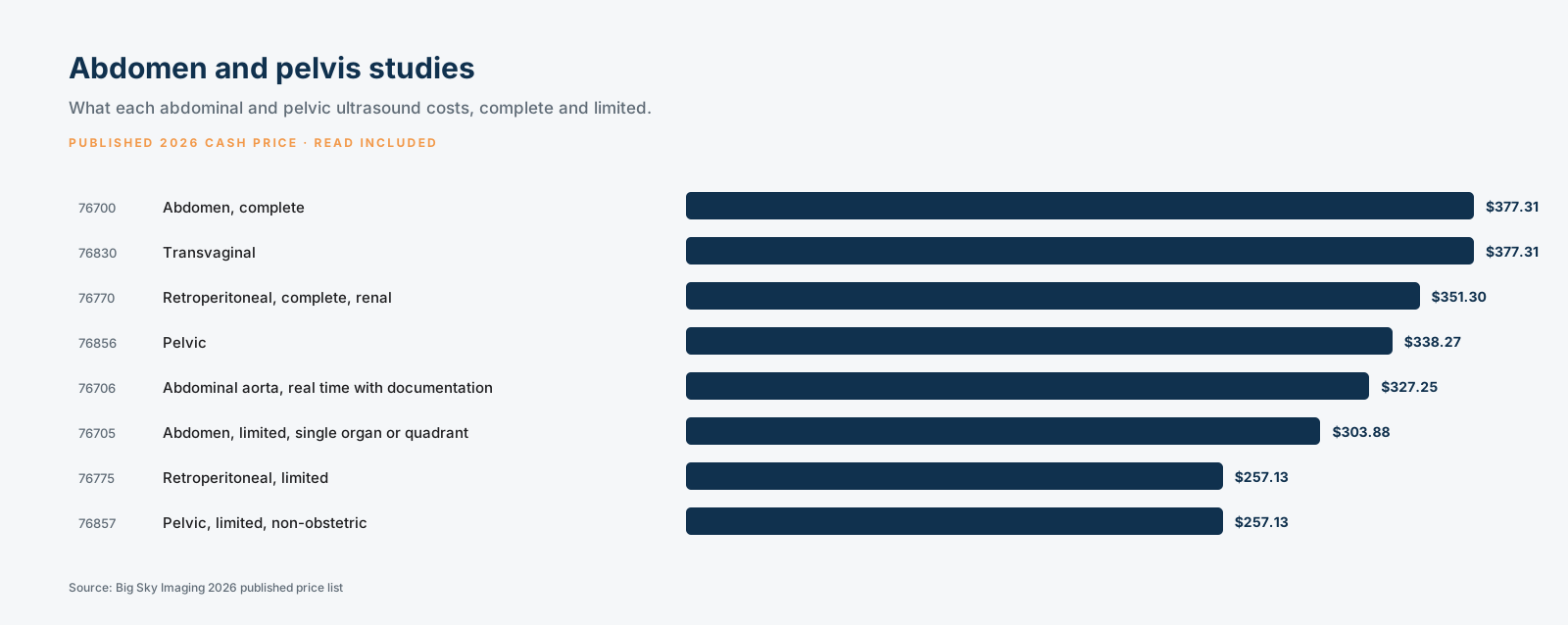
Published 2026 cash prices, each including the radiologist's read.
| CPT | Exam | Cash price |
|---|---|---|
| 76700 | Abdomen, complete | $377.31 |
| 76705 | Abdomen, limited, single organ or quadrant | $303.88 |
| 76770 | Retroperitoneal, complete, renal | $351.30 |
| 76775 | Retroperitoneal, limited | $257.13 |
| 76706 | Abdominal aorta, real time with documentation | $327.25 |
| 76856 | Pelvic | $338.27 |
| 76857 | Pelvic, limited, non-obstetric | $257.13 |
The full list of 43 studies covers the rest.